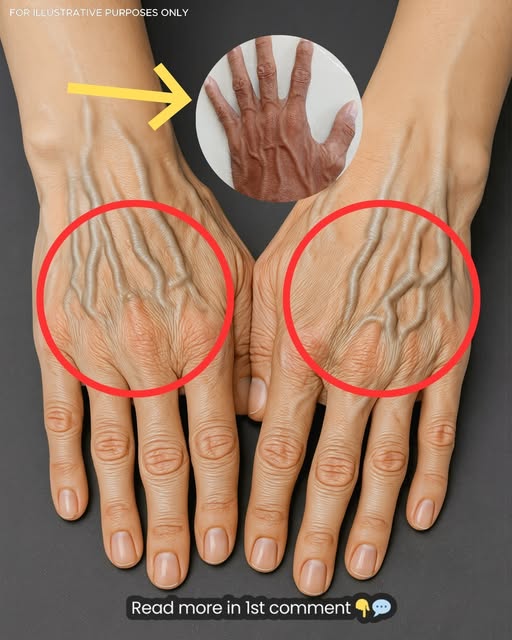
When you glance down and notice prominent, raised, or bluish veins on your hands, it’s natural to wonder whether they reveal something about your health. Some online claims suggest that visible veins could be linked to hidden kidney issues. But how accurate is that idea?
Let’s break down what science actually says about visible veins — and whether they have anything to do with kidney health.
For illustrative purposes only (Canva)
Why Hand Veins Become Noticeable
In most cases, visible veins are simply a normal anatomical variation. They can look more pronounced due to:
Aging — skin thins and loses collagen over time.
Low body fat — less cushioning makes veins stand out.
Genetics — some people naturally have more visible veins.
Exercise — increased blood flow temporarily enlarges veins.
Heat exposure — veins dilate to help cool the body.
Dehydration — reduced plasma volume makes veins more prominent.
For older adults and lean individuals, this is especially common. Importantly, visible veins alone are not a recognized sign of kidney disease.
How Kidney Disease Actually Affects the Body
Kidneys are responsible for filtering waste, balancing fluids, regulating blood pressure, and maintaining electrolytes. When they begin to fail, the effects are systemic — not cosmetic.
Typical signs of chronic kidney disease (CKD) include:
Swelling in hands, feet, or face (edema)
Fatigue and weakness
Changes in urination (frequency, volume, or appearance)
Foamy urine (protein leakage)
High blood pressure
Nausea or loss of appetite
Notice that prominent veins are not part of this symptom list.
For illustrative purposes only (Canva)
See more on the next page
Fluid Balance and Vein Visibility
Because kidneys regulate fluid, malfunction often leads to fluid retention. This causes puffiness or swelling, which can actually make veins less visible.
Swelling (edema): masks veins rather than highlighting them.
Dehydration: makes veins stand out temporarily. While repeated dehydration can strain kidneys, visible veins alone are not proof of kidney damage.
When Veins and Kidney Disease Do Intersect
There are rare, indirect connections:
Dialysis preparation: In advanced kidney failure, patients may need dialysis. Doctors often create an arteriovenous (AV) fistula in the arm, which intentionally enlarges veins for repeated access. These veins appear thicker, raised, and more visible — but this is a treatment-related change, not a symptom of kidney disease itself.
Warning Signs That Deserve Medical Attention
Instead of focusing on vein visibility, watch for these red flags:
Persistent swelling in hands, ankles, or around the eyes
see continuation on next page