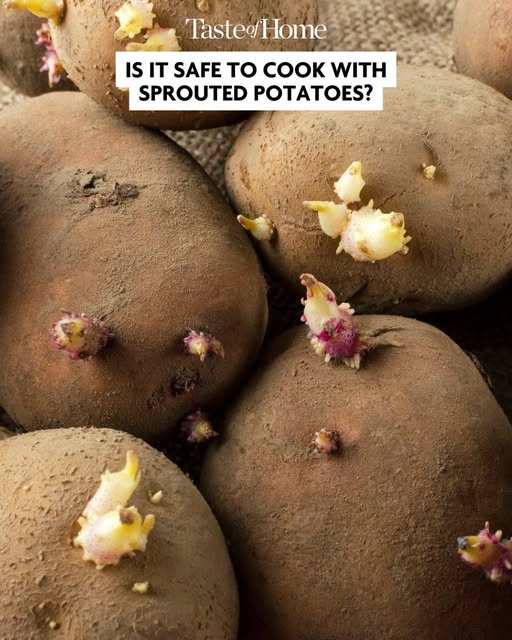
You know the drill: You get ready to chop potatoes for dinner and notice some unwelcome “eyes.” Immediately, you wonder, Are sprouted potatoes safe to eat?
We’ve all been there: You see a giant bag of potatoes on sale at the grocery store and jump on it. You can always whip up quick potato recipes, right? But what happens when your potato sprouts tiny green roots? Can you eat a potato that is sprouting? Or are you better off propagating potatoes instead?
Why Do Potatoes Sprout?
Potatoes will sprout when the conditions are right. If your spuds are in a well-lit area of the kitchen, in a basket with onions or on the counter after spending time in the refrigerator, they’ll end up with “eyes.”
It might be tempting to store your potatoes in the coldest place in the house to avoid this, but you should never store potatoes in the fridge. The starches can convert to sugar and produce dangerous chemicals when cooked.
Can You Eat Sprouted Potatoes?
It depends. If your potatoes have just begun to sprout, you may still be able to salvage them by cutting off the sprouted areas with a kitchen knife or potato peeler. If there are several large sprouts and the potatoes appear shriveled or wrinkled, toss them.
Follow the same food safety rules with sprouted potatoes as with any other aging produce: When in doubt, throw it out. According to the National Capital Poison Center, it’s best to throw away potatoes that have already sprouted. That’s because the sprouts are a sign that your potatoes contain higher levels of unsafe toxins than fresh ones do.
All potatoes contain two natural toxins called solanine and chaconine. Over time, these toxins naturally increase, especially if exposed to light. These toxins live in the potato sprouts and skin; the white flesh of the potato contains much less. While it would take multiple servings of any potato recipe to feel the effects of these toxins, they can cause vomiting, diarrhea, abdominal pain, headache and fever. Symptoms are usually mild but can be more severe in some people.
NEXT PAGE