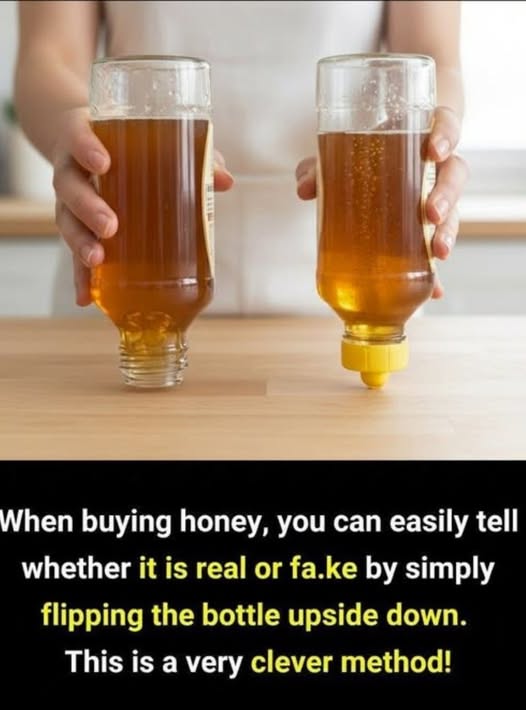
You’ve probably seen the viral claim by now:
“Turn the honey bottle upside down. If it flows slowly, it’s real. If it pours like water, it’s fake.”
It sounds convincing. Simple. Almost scientific.
And that’s exactly why it’s misleading.
While genuine honey is naturally thick, the so-called “bottle flip” test is an unreliable shortcut that can easily fool consumers. Factors like temperature, packaging, and even intentional manipulation by manufacturers can completely distort the results. In reality, many counterfeit honeys are designed to pass this very test.
So how do you actually tell the difference?
Let’s break it down.
🔍 Why the “Bottle Flip” Test Doesn’t Work
1. Temperature changes everything
Honey’s viscosity is highly sensitive to temperature.
Cold honey—real or fake—thickens and moves slowly.
Warm honey—real or fake—flows much faster.
A bottle kept in a warm kitchen or warehouse might appear “fake” even if it’s pure.
2. Fake honey is engineered to fool you
Modern food adulteration is sophisticated. Many fake honeys contain:
High-fructose corn syrup
Rice syrup or beet sugar
Added thickeners like guar gum or xanthan gum
These additives are specifically chosen to mimic the thickness of real honey, allowing fake products to pass visual tests with ease.
🔥 Continue Reading 👇 Next Page