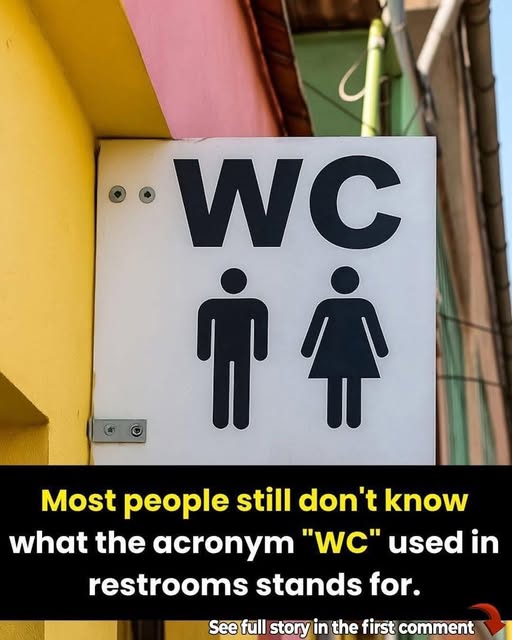
In Europe, “WC” is still widely used on public restroom signs.
In Asia, hotels and airports often use “WC” to make facilities easily identifiable to foreign travelers.
In North America, the term gradually gave way to “Restroom,” “Bathroom,” or “Toilet,” but “WC” remains understood in formal or international contexts.
🧱 Why “WC” Endures
The simplicity of the abbreviation makes it practical for signage. It transcends language barriers — two letters that instantly convey meaning. Designers and architects continue to use it because it’s short, neutral, and universally recognized.
🧠 Fun Fact
The “WC” symbol doesn’t just refer to toilets; historically, it represented the entire sanitary compartment — including washbasins and plumbing fixtures. In older British homes, the “WC” was often a separate room from the “bathroom,” which contained only a tub.
✅ Conclusion
So, next time you see “WC” on a door, remember it’s not just a random pair of letters. It’s a piece of history — a relic of the Victorian era that revolutionized hygiene and comfort. The term “Water Closet” reminds us how far sanitation has come, turning a simple necessity into a universal symbol of modern living.