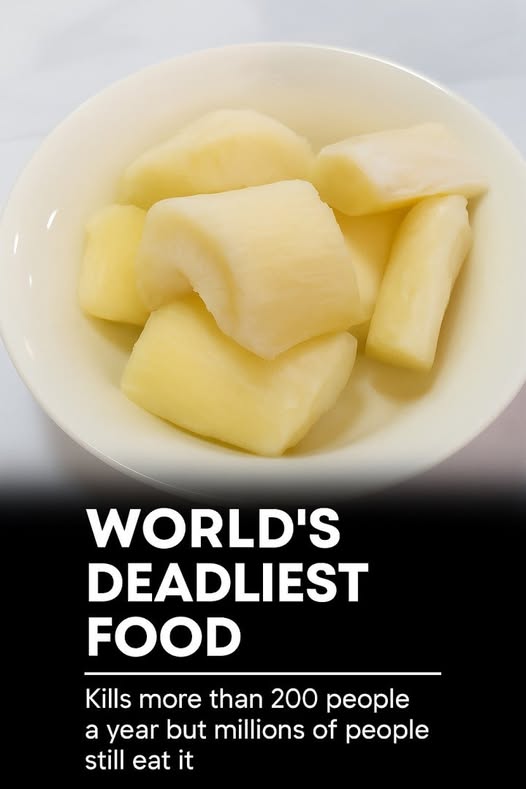
It may sound shocking, but one of the most widely consumed foods on Earth is also considered the world’s deadliest. Every year, more than 200 people die from poisoning linked to this staple food — and yet nearly half a billion people continue to eat it daily.
That food is cassava.
What Is Cassava?
Cassava is a root vegetable grown mainly in:
Africa
South America
Southeast Asia
It is a crucial source of calories for millions because it is:
Cheap
Easy to grow
Resistant to drought
For many families, cassava is a matter of survival.
Why Is Cassava So Dangerous?
Cassava naturally contains cyanogenic glycosides, chemicals that can release cyanide — a deadly poison — when the plant is eaten improperly.
There are two main types:
Sweet cassava (lower toxin levels)
Bitter cassava (much higher toxin levels)
If cassava is not processed correctly, it can cause acute cyanide poisoning, which may be fatal.
How People Die From It
Deaths usually occur when:
Cassava is eaten raw or undercooked
Traditional processing steps are skipped
Food shortages force people to rush preparation
Symptoms of poisoning include:
Dizziness
Vomiting
Severe stomach pain
Difficulty breathing
Loss of consciousness
Death in severe cases
Children are especially vulnerable.
Long-Term Health Effects
Long-Term Health Effects
Even when cassava poisoning is not fatal, long-term consumption of poorly processed cassava can lead to serious conditions such as:
Konzo — a permanent paralysis of the legs
Thyroid disorders
Nerve damage
see continuation on next page